
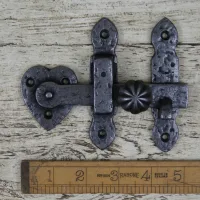
Traditional Suffolk latch in antique iron
Choosing the right latch is essential for both function and appearance, particularly in period homes, cottages, and restoration projects. Traditional latches are used on doors, gates, cupboards and furniture, and play a key role in how they operate while also contributing to the overall character of traditional interiors.
This guide explains the most common types of traditional latches, how they are used, and what to consider when selecting the right latch for your doors, gates, cupboards, or furniture.
Understanding Traditional Latches
Traditional latches differ from modern concealed mechanisms. They are often visible, surface-mounted, or handcrafted, and are chosen to complement period joinery and classic interiors.
When selecting a latch, it is important to consider where it will be used, how the door or gate opens, and whether the latch will be a visible feature or a more subtle fixing.
Suffolk Latches

Suffolk latch
Suffolk latches are one of the most traditional and widely recognised latch styles. They are typically surface-mounted and operated using a simple thumb bar mechanism.
These latches are commonly used on internal cottage doors, ledged doors, and period-style interiors where visible ironmongery adds character. Their simple design makes them reliable, easy to install, and ideal for rustic settings.
Gate Latches & Cabin Hooks

Cabin hook
Gate latches and cabin hooks are designed for securing doors, gates, shutters, and external fittings. They are simple, durable, and highly effective for keeping doors in place.
These are commonly used on garden gates, sheds, cupboards, and utility spaces where a full latch mechanism is not required but secure fastening is still important.
Cabinet & Cupboard Latches

Cupboard latch
Cupboard latches are smaller, lighter-duty fittings designed for cabinets, drawers, and furniture. These latches provide a simple way to keep doors closed while maintaining a traditional appearance.
They are often used in kitchens, dressers, and storage furniture where a subtle but functional latch is required.
Choosing the Right Latch
Selecting the right latch depends on how and where it will be used. Consider the following when making your choice:
- Internal doors often suit Suffolk-style latches
- Gates and external doors benefit from heavy-duty latches or hooks
- Furniture and cupboards require smaller, lightweight latches
- Visible ironmongery should match the style of the property
Choosing the correct latch ensures smooth operation while maintaining the traditional look of your home or project.
Matching Latches with Other Ironmongery
For the best visual result, latches should complement other hardware throughout the property. Matching finishes and styles across your ironmongery creates a consistent and well-designed space.
Finishes such as antique iron, black beeswax, and polished brass help create a consistent and authentic look throughout a property.
Choosing the Right Latch with Confidence
Choosing the right latch ensures doors, gates, and furniture operate reliably while maintaining the traditional appearance of your space. By considering the type of latch, its use, and the overall style of your interior, you can select hardware that balances function, durability, and heritage design.
If you’re unsure which latch is best for your door, gate, or furniture, our team is happy to help.